-1.png)
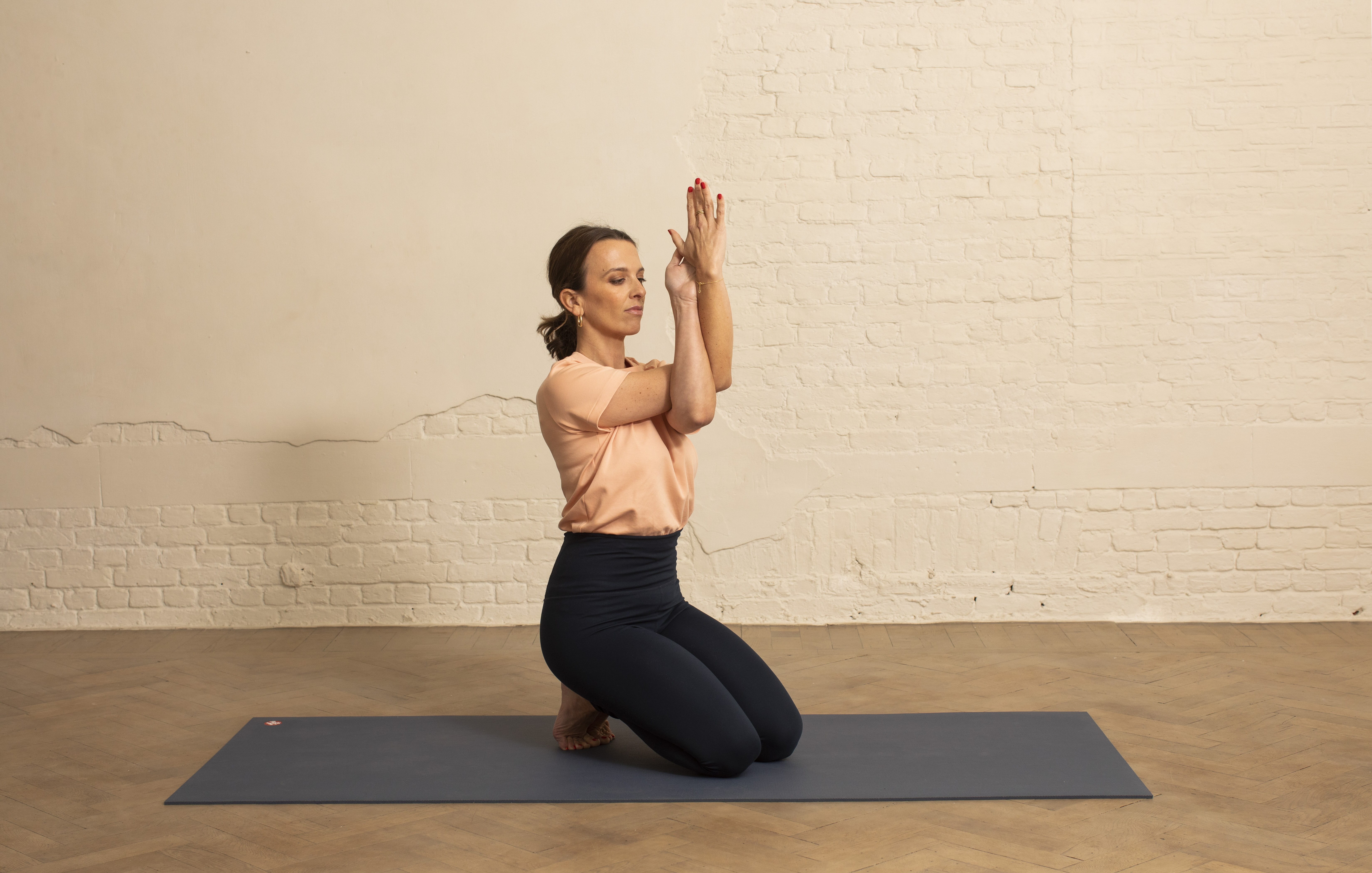
When people think of yoga, they often think of postures first. The shapes of the body. The strength, the flexibility, the balance. And yes, āsana practice is physical. We move, we stretch, we build stability, we explore our edges.
But in yoga, the body is never the whole story.
Before the posture becomes a yoga posture, there is the breath.
The breath is what turns movement into practice. It is what brings awareness into the body. It is what reminds us that yoga is not simply about what we do, but about how we are present while doing it.
In many movement practices, the focus is on the outer form. How high the leg lifts. How deep the backbend goes. How long we can hold a position.
In yoga, we begin somewhere more subtle.
We begin by noticing the breath.
Is it steady or restless? Deep or shallow? Forced or natural? Can we stay connected to it while moving, balancing, strengthening, or softening?
The breath becomes a guide. It tells us when we are pushing too hard. It shows us when we are distracted. It helps us sense whether we are practicing from ambition, habit, comparison, or genuine presence.
A posture can look beautiful from the outside, but if the breath is strained, the practice may have lost its center.
One of the reasons āsana practice starts with the breath is because the breath sits at the meeting point between body and mind.
When the mind is agitated, the breath often becomes short or irregular. When the body is tense, the breath may feel restricted. And when the breath becomes steady, the nervous system often receives the message that it is safe to soften.
This is why breath awareness is not just a technical detail. It is a doorway.
Through the breath, we begin to listen inwardly. We notice the state we are in before trying to change it. We create space between impulse and action. We learn to move with more intelligence and less force.
The breath helps us practice yoga from the inside out.
In dynamic practices such as Ashtanga or Vinyasa Yoga, breath and movement are closely connected. The inhale creates expansion. The exhale supports grounding, folding, twisting, or releasing. Movement follows the rhythm of the breath, rather than the other way around.
This gives the practice a meditative quality.
Instead of moving from one posture to the next as a sequence of separate exercises, the breath creates continuity. It becomes the thread that connects everything.
One breath, one movement.
Over time, this rhythm helps quiet the mind. The practice becomes less fragmented. We are no longer just “doing poses.” We are breathing through experience.
Many people come to yoga with the idea that progress means going deeper, becoming stronger, or mastering more advanced postures. But the breath teaches a different kind of progress.
Can we stay steady in challenge?
Can we remain soft while building strength?
Can we respect the body’s limits without giving up too quickly?
Can we notice when effort becomes force?
When the breath becomes tense, held, or uneven, it often means we have moved beyond a useful edge. This does not mean we should avoid challenge. It means we learn to meet challenge with awareness.
The breath keeps the practice honest.
It asks us to stay present, rather than perform. To feel, rather than force. To respond, rather than react.
The mind easily wanders. Even on the mat, we may think about our to-do list, compare ourselves to others, or judge how our body feels that day.
The breath gives us something simple to return to.
Again and again.
This returning is part of the practice.
Each inhale invites us into the present moment. Each exhale offers a chance to soften unnecessary tension. The breath becomes an anchor, especially on days when the mind feels busy or the body feels resistant.
In this way, āsana practice becomes more than physical movement. It becomes a training in attention.
Starting with the breath also reminds us that yoga does not ask us to arrive in a perfect state before we begin.
Some days the breath is calm. Some days it is shallow. Some days the body feels open. Some days everything feels heavy, stiff, or distracted.
The practice begins there.
Not in the version of ourselves we wish we brought to the mat, but in the reality of this moment.
By listening to the breath, we learn to meet ourselves with more honesty. And from that honesty, the practice can unfold.
A good yoga practice is not measured only by flexibility, strength, or the complexity of the postures. It is measured by the quality of attention we bring.
The breath teaches that quality.
It teaches steadiness. It teaches patience. It teaches when to stay, when to soften, and when to step back. It reminds us that yoga is not about controlling the body, but about creating a deeper relationship with ourselves.
So before the first Sun Salutation, before the first forward fold, before the first attempt to balance, begin with the breath.
Feel it.
Follow it.
Let it guide the practice.
Because when āsana starts with the breath, the posture becomes more than a shape. It becomes a place of awareness.
Namas-té,
Ine
