
I’ve noticed a little trend in our yoga shala.
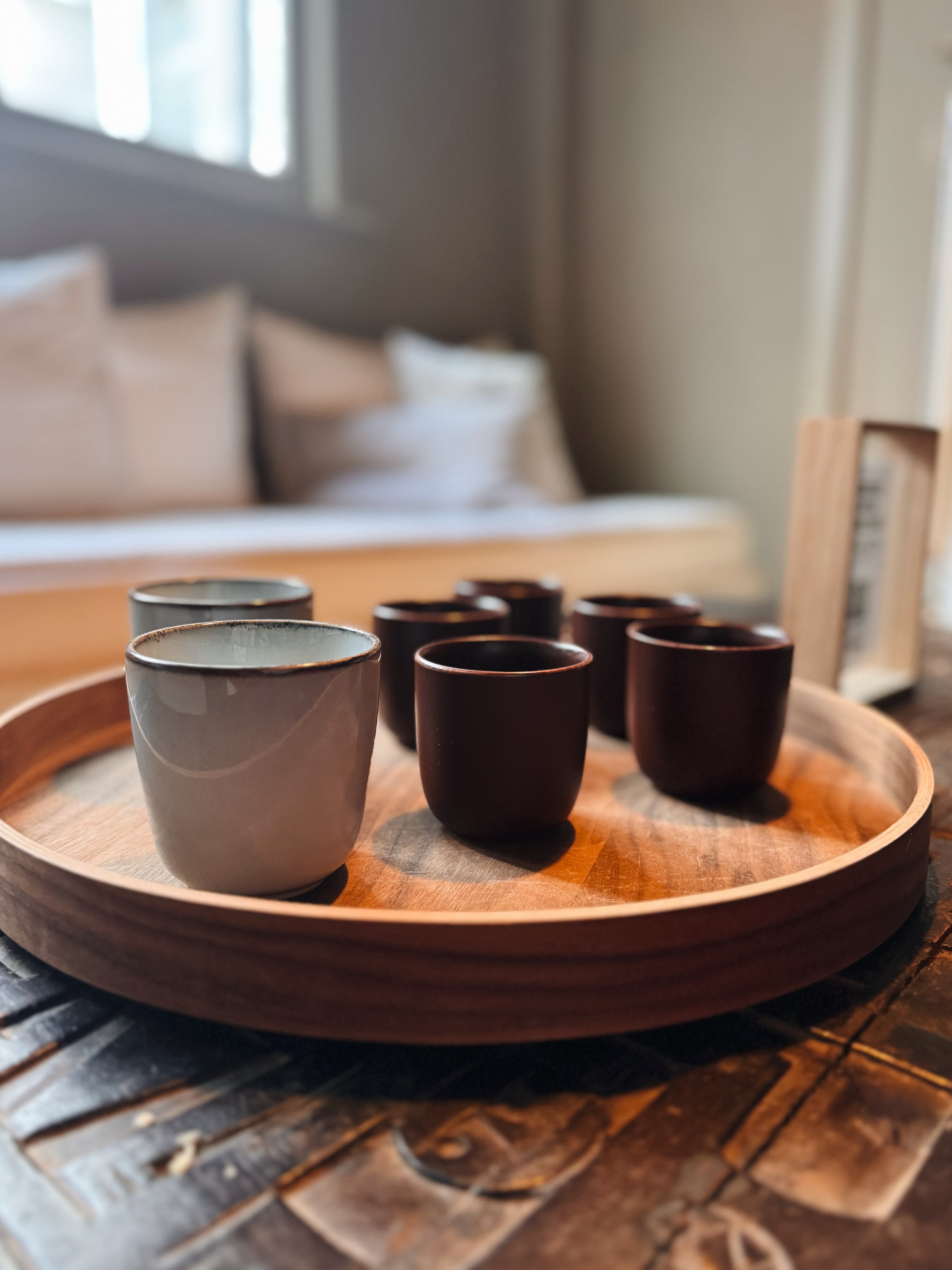
People come in with their yoga mats and leave with a little more than inner peace. Sometimes toilet paper. Sometimes some teabags or incense. And lately, even our beautiful new tea cups.
I knew the cups were lovely. I just hadn’t realised they were take-them-home lovely.
Perhaps we need a small clarification: the tea is for you. The cup is for everyone.
It is slightly funny to find yourself thinking about toilet paper while preparing to teach yoga philosophy. But all jokes aside, a yoga studio is a very good place to practise asteya: being in the state of non-stealing.
And the practice begins with something quite ordinary. Leaving what belongs here, here.
Nobody who walks through our doors needs to be a perfect person. I certainly am not one. We arrive with our habits, contradictions, worries and blind spots. There is room for all of that.
There is also room for accountability.
We can welcome people as they are and still expect basic decency: respect for one another, care for the space, and an understanding that something being available to use does not mean it is available to take home.
A shared space depends on this understanding. Someone chooses the cups, buys the tea, replenishes the supplies and takes care of the things we all enjoy. When those things disappear, someone else has to replace them. Small actions have consequences, even when the object itself seems insignificant.
This is where yoga philosophy becomes very practical.
In Patañjali’s Yoga Sūtras, asteya is one of the five yamas, the ethical restraints that form the first limb of the eightfold path. It is often translated simply as non-stealing. In Sūtra 2.37, Patañjali speaks of becoming firmly established in it. That wording invites us to consider something deeper than occasionally resisting the temptation to take what is not ours.
What would it mean to become settled in a way of living where we do not take what has not been freely given?
The cup is an obvious example. Other examples are easier to overlook.
Taking credit for someone else’s work. Repeating another person’s words as though they were our own. Sharing a confidence that was entrusted to us, because we have a good story to tell.
We can also bring asteya into how we approach someone’s time and attention. Do we ask whether they have space to listen, or assume they are always available? Do we honour an agreement, or leave someone else carrying the work we said we would do?
These are ways I find it useful to bring the teaching into daily life. They ask us to notice where wanting, convenience or habit can make us forget the person on the other side.
Of course, needing support is human. Asking for help is human. We do not have to become so careful about taking that we forget how to receive.
The distinction is whether something is offered freely, or whether we decide we are entitled to it.
What interests me is how quickly the mind can make an exception.
It’s only one.
They have plenty.
They won’t miss it.
We can be very convincing when we want something.
I think part of practising asteya is learning to hear those explanations without immediately agreeing with them. To pause long enough to ask: Has this been offered to me? Have I asked? What am I assuming?
That pause gives us a choice.
It also allows us to appreciate something without needing to possess it. We can enjoy a beautiful cup, drink our tea, and leave it for the next person. We can admire someone’s knowledge without claiming it. We can receive care with gratitude and respect the limits of the person offering it.
There is freedom in being able to enjoy what is here without making it ours.
Ethical practice will sometimes reveal things about ourselves that we would rather not see. I don’t think the purpose is to turn that discomfort into shame. It can become a reason to pay attention and make a different choice.
If we have taken something, we can return it. If we have claimed credit, we can acknowledge the person whose work it was. If we have taken someone’s availability for granted, we can ask more carefully next time.
We are allowed to make mistakes. We are also capable of repairing them.
That is something I hope our shala can support: a place where we practise with sincerity, including in the small moments before and after class. Where care for the people and the space becomes part of what we learn.
And if one of our tea cups has somehow found its way into your kitchen, you are welcome to bring it back.
We’ll put the kettle on.
Namas-té,
Ine
